

Job scams: Never pay to work
Job scams rank among the top predatory schemes that Veterans and military families encounter.
In pursuit of remote work and higher income, anyone can easily become a target. Hiring scams are particularly deceiving, targeting not just money, but also personal information and sensitive documents.
These scams can take many forms, and can be equally as damaging. Veterans, service members and their families are specifically targeted due to their access to benefits. According to reports from the Federal Trade Commission and the Better Business Bureau, they suffered a higher median dollar loss than non-military consumers, with total reported losses of $584 million.
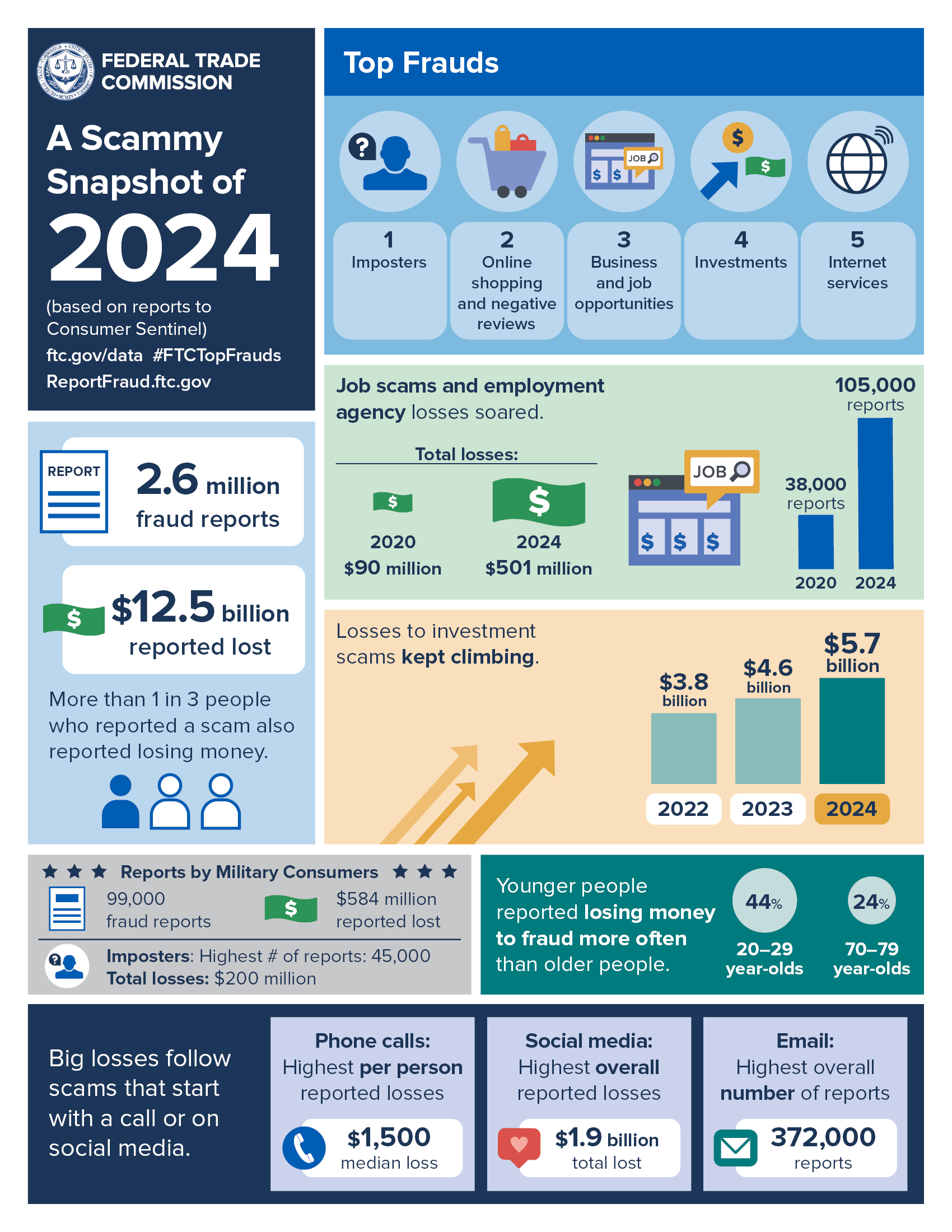
VA is dedicated to safeguarding Veterans, service members and their beneficiaries from online threats. As technology advances, so do scammers’ strategies. VA aims to ensure Veterans and their loved ones are informed about these various scam techniques, enabling them to recognize fraud and protect themselves effectively.
Warning signs of a job scam
Scammers are becoming more sophisticated, utilizing job scams that promise lucrative opportunities to eager candidates. Knowing how to recognize warning signs can help you avoid these scams:
- Use caution with unsolicited contacts who claim to have “found your resume” or who offer a job without an application.
- Be wary of offers that seem too good to be true. They usually are. If someone is offering high pay, low hours, with minimal experience, it is likely a scam.
- Be cautious of pressure-to-act-fast tactics that request you to quickly provide personal information (i.e. Social Security number, bank details, etc.) or sign an employment contract sent in advance.
- Reputable companies are transparent about position details. Vague roles should raise suspicion. Authentic job descriptions are clear and concise, while fraudulent offers often may contain grammatical errors and fewer details. Fraudulent companies lack verifiable details and may not have an official website.
- Scammers use persuasive phone tactics and suggest downloading unfamiliar software, which could be malicious. Genuine companies use secure, well-known communication platforms.
- If a potential employer asks you to pay them for equipment, training, onboarding or background checks in order to secure a job, treat it as a scam. Legitimate employers generally cover these costs and do not request an upfront payment to be hired. Scammers also tend to insist on non-traditional payment methods, such as gift cards, cryptocurrency, payment apps, or wire transfer services like Western Union or MoneyGram. These payment methods are similar to cash transactions, making it difficult to recover your money once paid.
How to steer clear of job scams
It can be hard to tell if a job opportunity is real or a scam. Scammers post fake job ads online, on social media and even on job search websites. They sometimes make the ads look like they are from real companies. They do this to get money or personal information from you. They may also send texts to your personal phone.
Approach every job opportunity cautiously until you know the company and job are real.
- Use trusted job search platforms when conducting your search to avoid scams. Websites such as usajobs.gov and careeronestop.org are government-sponsored, safe, and reliable.
- Verify sources. Contact companies directly using known phone numbers or websites, not those provided by the recruiter.
- Research the prospective company before applying. Conduct an online search for the company’s name along with keywords like “review,” “complaint” or “scam” to see if others have encountered issues. Be wary of interview requests or job offers for positions for which you did not apply.
- Do not click on questionable links or open attachments in unsolicited emails or text messages. Scammers often use “spoof” links and accounts that appear close to common websites you are familiar with.
- Never pay upfront for a job. Reputable employers will never ask for payment to secure a position. If you receive a check with instructions to deposit and send part of the money back, it is a scam. The check is likely counterfeit.
- Consult with someone you trust. Share the job offer with a trusted friend or family member to get their perspective.
- Do not accept a job offer if you feel pressured. These tactics are used by scammers to rush you past your normal safety checks. If you feel rushed and pressured, stop and investigate—these are classic job scam tactics.
- Trust your instincts. If something feels off, it probably is. Scammers exploit the natural connection and trust that can come from a shared military background. Use due diligence regardless of who is making the job pitch.
It is essential that Veterans, service members and their families recognize common online scams and take measures to protect their personal information and benefits. VA is committed to providing a safer online environment for the military and Veteran communities.
Veterans and military families who suspect they have experienced fraud can find more and report to the appropriate agency at www.vsafe.gov, or by calling 833-38V-SAFE.
Legal Disclaimer:
EIN Presswire provides this news content "as is" without warranty of any kind. We do not accept any responsibility or liability for the accuracy, content, images, videos, licenses, completeness, legality, or reliability of the information contained in this article. If you have any complaints or copyright issues related to this article, kindly contact the author above.
