

The Rental Property Reality Check: When 'Let the Tenant Pay the Mortgage' Stops Working

Bluecastle Lending, Realty & Title

Acrezip
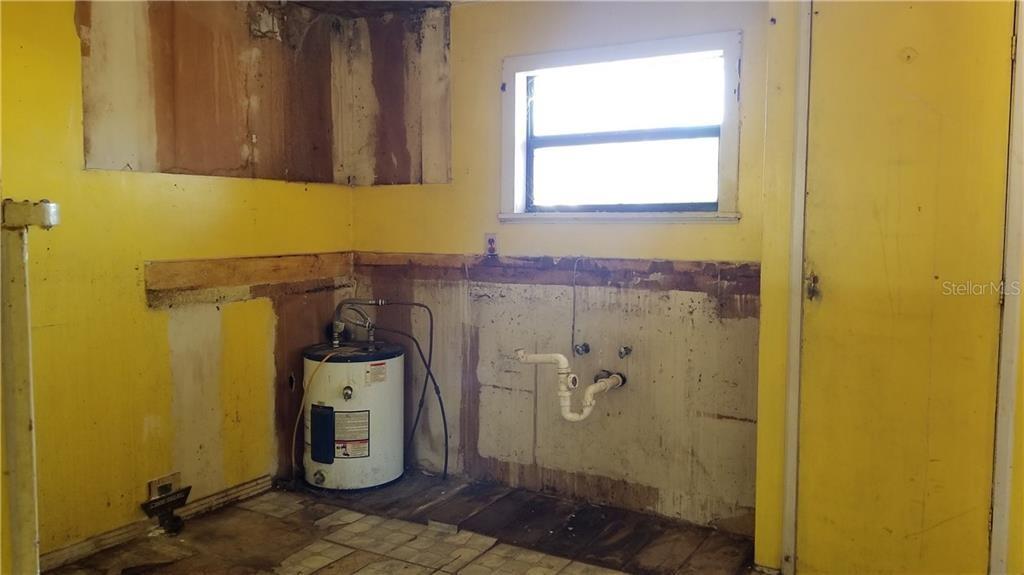
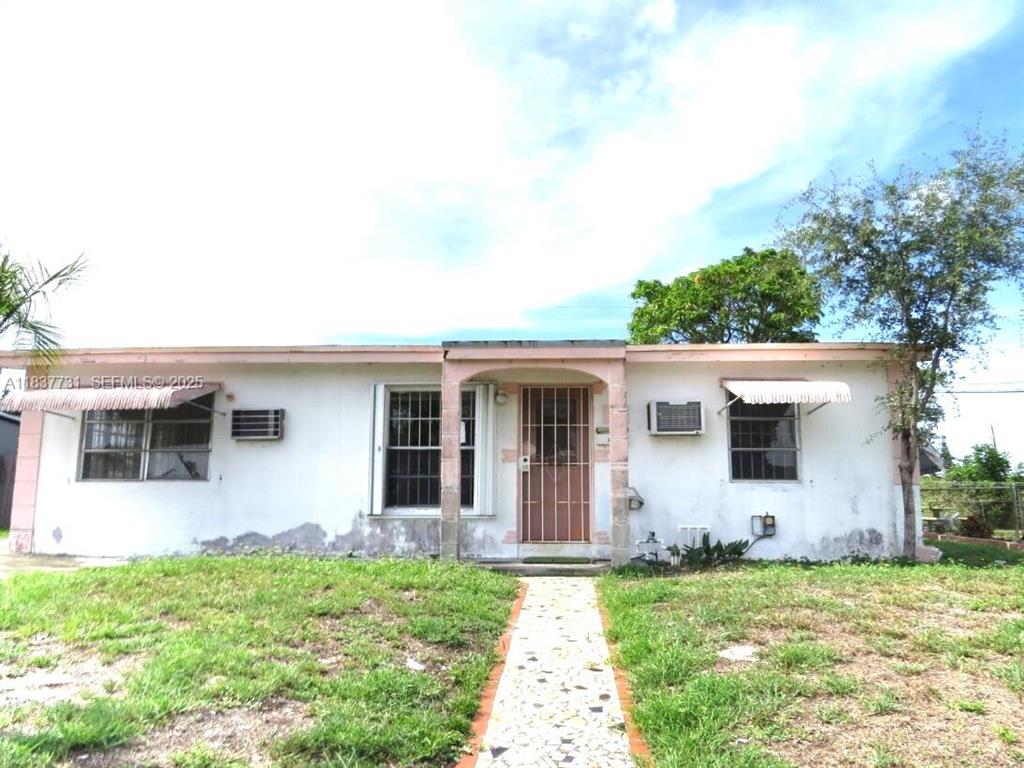
Ugly house
From accidental landlords to out-of-state investors, the dream of passive wealth can quickly become a financial crisis when a bad tenant stops paying.
Real estate investing is sold as passive income, but it's not passive when the rent stops and the mortgage is due. If your mtge payment depends on a tenant's rent, underwrite them like a mortgage loan”
CORAL SPRINGS, FL, UNITED STATES, September 16, 2026 /EINPresswire.com/ -- Florida’s rise in accidental landlords and foreclosure activity offers a cautionary lesson: ambition can buy a rental property, but reserves, disciplined tenant underwriting and decisive action may determine whether it becomes an asset or a financial emergency.— Alex Baglioni
The idea is simple, appealing, and increasingly common: buy a new home, keep the old one, and let a tenant pay the mortgage.
For others, the dream begins more deliberately. Buy an investment property in Florida, collect rent from hundreds of miles away, allow tenants to gradually pay down the mortgage and build an appreciating asset for retirement.
Homeowners choose this path for plenty of reasons. Some want passive income. Some believe real estate will appreciate over the long term. Others inherit a property and decide not to sell it. Many homeowners who purchased or refinanced when mortgage rates were much lower are reluctant to give up inexpensive financing when they move to another home. And increasingly, some become landlords almost by accident.
Zillow reported in March 2026 that 2.3% of homes listed for rent had previously been listed for sale, the second-highest share in nearly six years of tracking. Florida was among the states with the largest concentrations of these so-called “accidental landlords”—homeowners who could not or did not want to sell and instead decided to rent the property.
The reasoning often sounds convincing: Why sell an appreciating asset? Why give up a low mortgage rate? Why not let somebody else pay down the loan? Why not keep the house for another 10 or 20 years and allow rent, amortization, and appreciation to build wealth?
All of those things can happen. But real estate ambition alone does not make them happen. The equation works only as long as the property performs. And for a leveraged landlord, the most important part of that equation may not be the house. It may be the tenant.
The illusion of passive income can disappear remarkably quickly when the rent stops. For many everyday landlords, particularly those owning only one or two investment properties, monthly rent is not simply additional income. It is the money expected to pay the mortgage, property taxes, insurance, homeowners association fees, maintenance and other carrying expenses.
A tenant pays $3,500. The property's expenses consume most of it. The landlord keeps the difference while the principal is gradually reduced. On paper, it can be an excellent long-term wealth strategy. But if the $3,500 rent suddenly becomes $0, the $3,000 or $3,200 in property expenses do not become $0 with it.
Now the landlord must carry the investment property while also paying for the home in which the landlord actually lives. One missed rent payment may be manageable. Several months can become a crisis.
Research from Princeton University has found that nonpayment of rent is the reason behind most evictions. More recent economic research has similarly documented that tenant nonpayment is common and that landlords must constantly weigh whether to tolerate temporary delinquency or begin the costly eviction process.
The tenant may have lost a job, gone through a divorce, experienced illness, or simply stopped paying. Whatever the reason, the financial consequences eventually reach the property owner.
The landlord may lose several months of rent while pursuing possession of the property. Attorney and court expenses can accumulate. Once possession is recovered, the property may need cleaning and repairs, followed by another vacancy period while a replacement tenant is found.
If the landlord had only a few thousand dollars in reserves, the original investment plan can unravel rapidly.
Historical research from the JPMorgan Chase Institute demonstrated just how closely the two cash flows can be connected. During the pandemic disruption, metropolitan areas experiencing larger declines in landlord rental revenues also showed higher rates of missed mortgage payments among rental-property owners.
The lesson extends well beyond that unusual period: when the mortgage depends on rent, a disruption in rental income can become a mortgage problem. That makes tenant selection more important than many first-time landlords realize. Finding a tenant should not simply mean finding somebody willing to pay the asking rent.
A landlord whose mortgage payment depends upon that rent is effectively extending the tenant the use of an asset worth hundreds of thousands of dollars while relying on that person to make a substantial payment every month.
Banks do not approve a $400,000 mortgage because an applicant says, “Don't worry, I can afford it.” They underwrite. Landlords can borrow the same discipline.
That does not mean literally applying mortgage guidelines to rental applicants. It means evaluating the applicant's ability and history of meeting financial obligations with similar seriousness.
Income should be verified rather than simply stated. Recent and consecutive pay stubs, employment verification, W-2s, 1099s, or other appropriate documentation can establish whether income is stable and likely to continue. Bank statements can show whether the applicant has financial reserves or is living from paycheck to paycheck. Credit history can reveal how consistently existing obligations have been paid.
Recurring debts should be considered alongside the proposed rent. An applicant earning substantial income but already carrying significant monthly obligations may have less capacity to absorb an unexpected expense than the gross salary suggests.
Rental history should be verified, preferably beyond a telephone number supplied by the applicant. Prior property managers or verifiable ownership records can help establish whether rent was paid consistently and the property was maintained appropriately.
Tenant-screening reports can also include credit information, rental and eviction histories, employment verification, and risk assessments. TransUnion, for example, markets tenant-screening products specifically to smaller landlords and includes tools designed to compare reported income with credit behavior.
No screening process can predict the future. A financially responsible tenant can lose a job tomorrow. But there is an enormous difference between unavoidable future hardship and accepting avoidable risk because the landlord needed somebody—anybody—to start paying rent immediately.
The objective is not to find a perfect tenant. It is to make a rational underwriting decision before allowing the success of a leveraged real estate investment to depend on that person's monthly payment.
ATTOM's Mid-Year 2026 U.S. Foreclosure Market Report found 27,494 Florida properties with a foreclosure filing during the first six months of the year, up 32.65% from the same period in 2025. Florida posted the nation's highest foreclosure rate, with one filing for every 373 housing units. Lenders initiated 20,358 new Florida foreclosures during those six months.
Absentee and investment properties carry another vulnerability: distance. A landlord living hundreds of miles away does not see the house every morning. A leaking roof is an email. An unpaid association bill is another envelope. A tenant problem is a telephone call. A vacant property is still out of sight. That distance can create the illusion that the problem itself is distant.
It is not.
The mortgage continues. So do taxes, insurance, association fees, utilities, and maintenance.
ATTOM's third-quarter 2026 vacancy report found that investor-owned residential properties were vacant at more than twice the overall residential vacancy rate. It also identified 8,482 vacant properties already in the foreclosure process, commonly called “zombie foreclosures.”
Once an investment begins to fail, another very human pattern can emerge.
The owner tells himself the next tenant will solve it. The property will rent next month. The current tenant will catch up. The repair is almost finished. The refinancing will come through. The market will improve. One missed mortgage payment becomes two. Two become three. Late charges and attorney fees begin to accumulate. And the decision becomes harder precisely when it matters most.
The strain rarely remains confined to the investment property.
A systematic review published through the National Institutes of Health examined 35 studies involving foreclosure and health. Thirty-two found adverse associations with physical or mental health, including depression, anxiety and psychological distress. Financial pressure can also become relationship pressure.
Research published in the Journal of Consumer Psychology examined more than 8,000 participants and found that people experiencing higher financial stress were less likely to discuss finances with their partners because they anticipated conflict. That creates a cruel cycle.
The bigger the investment problem becomes, the harder it can become to talk about. The harder it becomes to talk about, the easier it becomes to postpone a decision. And postponement can become expensive.
Foreclosure, however, is a legal process—not an instantaneous event. That difference may be the owner's greatest remaining asset.
ATTOM recorded 20,358 Florida foreclosure starts during the first half of 2026, while lenders completed foreclosure and took ownership of 2,070 Florida properties during the same period. Those figures do not represent the same exact properties, but they illustrate that financial distress, foreclosure filing, and eventual loss of ownership are different stages.
There can still be a window in which the owner controls the outcome. Once the lender takes ownership, that control largely disappears.
Realtor.com reported that the median foreclosed home sold for 27.2% below its estimated market value. When the property becomes bank-owned, preserving the former owner's equity is no longer the objective driving the transaction.
The owner may also face substantial credit damage, waiting periods before becoming eligible for certain mortgage programs and, the possibility of a deficiency claim when the foreclosure does not satisfy the debt.
The lesson for prospective landlords is prevention. Do not build an investment plan that assumes rent will arrive perfectly every month. Maintain reserves. Budget for vacancy. Budget for repairs. Treat tenant selection as underwriting. And understand that being a landlord is not entirely passive simply because the property is far away. Act while choices still exist.
“Real estate investing is often sold as passive income, but there is nothing passive about a property once the rent stops and the mortgage still has to be paid,” said Alex Baglioni, Chief Executive Officer of Acrezip LLC and Bluecastle Lending, Realty & Title. “Ambition can get somebody into real estate, but discipline is what keeps an investment healthy. If your mortgage depends on a tenant's rent, treat selecting that tenant with the same seriousness as underwriting a mortgage loan. And when something goes wrong, the earlier the owner faces the numbers, the more choices usually remain.”
For owners who have already exhausted the obvious solutions, experienced companies like Acrezip have been developing alternatives between a lengthy conventional listing and the steep discount typically required by a traditional cash investor.
Depending on a property's economics, those alternatives can include curing arrearages as part of a sale, absorbing certain transaction expenses, purchasing around existing financing where legally and contractually appropriate, or entering into a purchase contract while locating a subsequent purchaser before closing.
The objective is not to pretend the failed investment never happened. The goal is to preserve as much as possible while the owner still controls the property.
A conventional sale may still be the best solution when sufficient time and equity remain. A mortgage servicer may offer loss-mitigation alternatives. Some owners may be able to cure the delinquency and continue operating the property. Others may simply need out.
What matters is recognizing that a rental property was intended to build wealth—not become a reason to destroy the wealth, credit, and relationships the owner already has.
The path to becoming an absentee landlord often begins with a sentence that sounds almost foolproof: “Let the tenant pay the mortgage.” Sometimes the tenant does exactly that for decades. But the real investment strategy begins with the next question: “What happens if the tenant doesn't?”
The owner who answers that question before buying the property is investing. The owner who never asks it is relying on hope.
About Acrezip
Acrezip LLC is a real estate investment firm headquartered in Coral Springs, specializing in working with homeowners whose situations may vary from conventional real estate transactions. Leveraging thirty years of industry experience, the company offers innovative solutions designed to achieve mutually beneficial outcomes for all parties involved. For further information, please visit acrezip.com or via phone at (954) 866-0000.
Alex Baglioni
Acrezip LLC
+ +1 954-866-0000
email us here
Visit us on social media:
Facebook
Legal Disclaimer:
EIN Presswire provides this news content "as is" without warranty of any kind. We do not accept any responsibility or liability for the accuracy, content, images, videos, licenses, completeness, legality, or reliability of the information contained in this article. If you have any complaints or copyright issues related to this article, kindly contact the author above.
