

UK Salon Industry Faces Growing Workforce Shortage as Demand for Experienced Stylists Continues to Rise
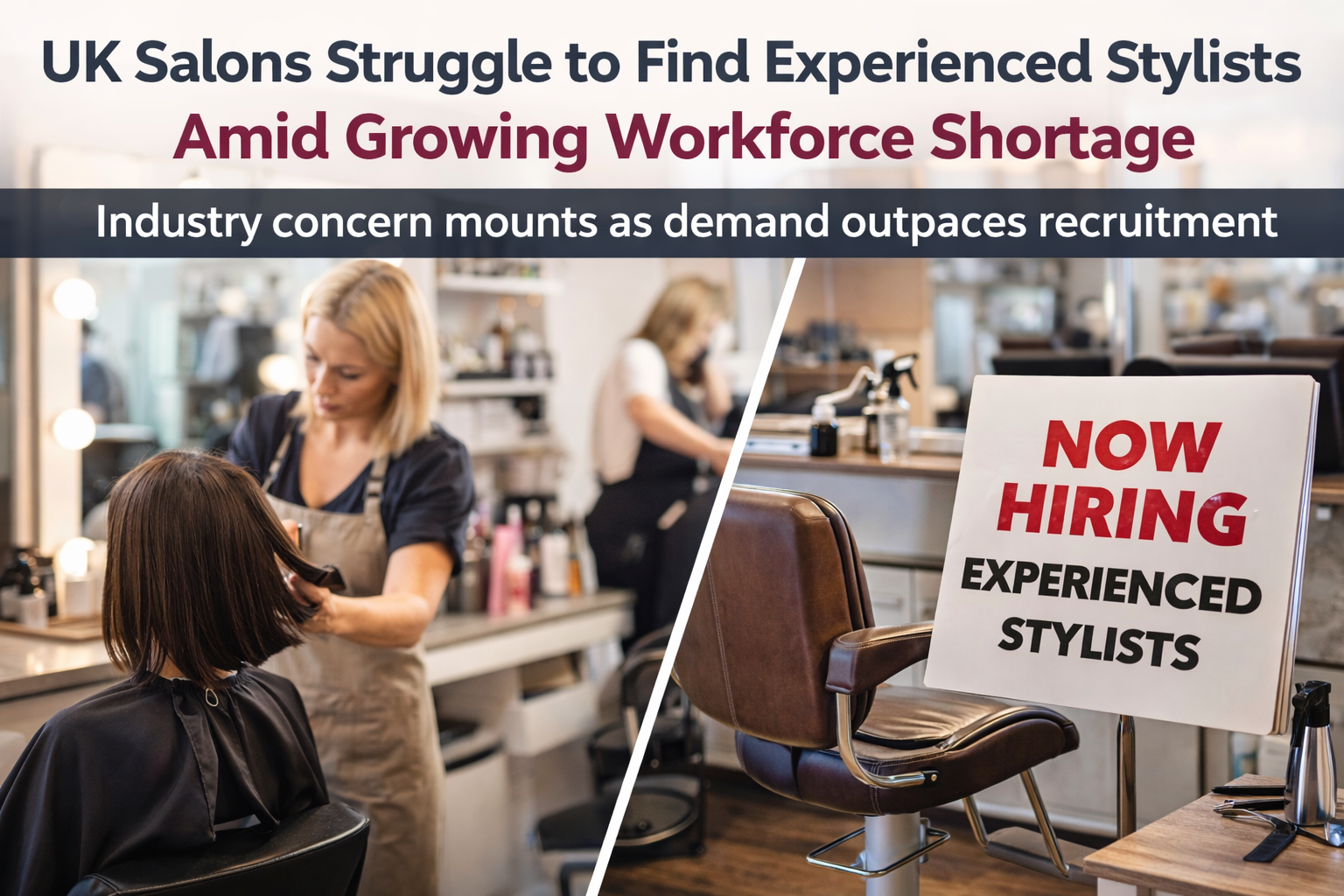
A working UK hair salon highlights ongoing industry recruitment pressures as demand for experienced stylists continues to outpace staffing availability.
Industry professionals highlight recruitment and retention pressures shaping the future of the UK hair and beauty sector
LONDON, UNITED KINGDOM, February 4, 2026 /EINPresswire.com/ -- Salon owners and industry professionals across the United Kingdom are reporting increasing workforce pressures as demand for experienced stylists continues to outpace recruitment, creating challenges for businesses attempting to maintain service capacity and client availability across the hair and beauty sector.Feedback gathered from salon operators in major cities and regional markets indicates that many businesses are currently struggling to recruit qualified stylists while also retaining experienced professionals, leading to longer appointment waiting times and reduced availability for specialist services in some locations.
Industry observers note that the current situation is not driven by reduced interest in hairdressing careers but rather by a combination of training pipeline pressures, changing career expectations, and shifting employment preferences among newer and established professionals alike.
Over the past decade, the UK salon industry has undergone significant transformation, with increased competition, rising operational costs, and changing client expectations placing greater demands on salon teams. At the same time, the profession itself has evolved, requiring stylists to maintain technical expertise while also developing strong communication skills, customer service capabilities, and ongoing training in new techniques and products.
Salon owners report that while new entrants continue to join the industry through apprenticeship routes and private academies, the time required for junior stylists to reach full productivity has increased. Modern clients expect higher levels of consultation, service personalisation, and technical precision, meaning that newly qualified stylists often need extended mentoring before managing fully booked appointment schedules independently.
This training period places additional responsibility on senior staff, who must balance client workloads with coaching responsibilities. In some cases, experienced stylists are carrying heavier workloads to compensate for staffing shortages, creating further retention challenges if workload pressures become unsustainable.
Recruitment difficulties are not uniform across the country but appear more pronounced in larger urban areas where competition between salons is particularly intense. Businesses located in high-demand city centres frequently compete for a limited pool of experienced stylists, often resulting in higher staff turnover as professionals move between employers seeking improved working conditions or career progression.
At the same time, some experienced stylists are increasingly choosing independent working arrangements, including chair rental models, freelance work, or private studio operations. These alternatives provide greater schedule flexibility and income control for individuals but can reduce staffing availability within traditional salon teams.
Industry professionals also point to lifestyle considerations influencing career decisions. Younger professionals entering the sector are reported to place greater importance on flexible working hours, mental wellbeing, and long-term career sustainability. As a result, traditional salon working structures are evolving as businesses attempt to adapt employment models to meet changing workforce expectations.
Client behaviour also plays a role in shaping workforce demands. Salon visits have become more service focused, with consultations often extending beyond technical treatment into broader style guidance and maintenance planning. As expectations increase, the time required per client appointment often grows, meaning fewer clients can be accommodated per day without additional staffing.
Review feedback patterns across independent salon platforms suggest that strong stylist-client relationships remain central to repeat booking behaviour. Clients frequently cite personal connection, understanding of hair history, and stylist familiarity as important factors influencing loyalty. When experienced stylists leave a salon, businesses may experience temporary declines in client retention while relationships are rebuilt.
Industry platforms, including bestsalons.com, have observed that reviews often highlight individual stylist performance rather than solely salon branding. This reinforces the importance of workforce stability in maintaining consistent customer satisfaction over time.
Training providers and educators have emphasised the importance of strengthening apprenticeship pathways and continued professional development programmes to support long-term workforce growth. Industry groups continue to encourage collaboration between salons and training institutions to ensure new professionals are equipped with both technical and client management skills required in modern salon environments.
Economic factors are also contributing to recruitment challenges. Rising living costs in some metropolitan areas make it difficult for junior stylists to establish themselves financially during early career stages when earning potential may be limited while skills develop. This financial pressure can lead some individuals to leave the industry or seek alternative employment options.
Despite these pressures, demand for professional hair and beauty services remains strong across the UK. Many salons report stable or increasing client numbers, suggesting that workforce constraints rather than customer demand currently represent the primary operational challenge.
Industry analysts suggest that the sector is entering a period of adjustment as businesses reassess staffing structures, training investment, and career development support in order to maintain service standards while attracting new professionals into long-term careers.
Some salon groups have responded by increasing investment in internal training programmes, mentorship initiatives, and clearer promotion pathways, aiming to demonstrate viable career progression within the industry. Others are experimenting with flexible scheduling models designed to retain experienced stylists seeking improved work-life balance.
Observers note that while workforce pressures present immediate operational challenges, they may also encourage positive change within the sector. Increased focus on training quality, professional development, and employee wellbeing could strengthen long-term industry sustainability if successfully implemented.
Clients, meanwhile, are increasingly advised to book appointments further in advance as availability fluctuates in certain areas. Some salons have introduced waiting lists or extended opening hours where staffing allows in order to meet ongoing demand.
Industry professionals expect recruitment and retention to remain key topics within the hair and beauty sector over the coming years as businesses adapt to evolving employment expectations and continued consumer demand for professional salon services.
Although challenges remain, many salon owners express confidence in the long-term future of the industry, noting that hairdressing continues to provide creative career opportunities and strong personal client relationships that are difficult to replicate in other professions.
As the UK salon industry navigates these workforce shifts, collaboration between businesses, educators, and industry organisations is expected to play an important role in supporting both current professionals and the next generation of stylists entering the field.
About Best Salons Journal
Best Salons Journal provides reporting and analysis on developments affecting the hair and beauty industry, covering business trends, workforce issues, and consumer behaviour shaping the sector.
About bestsalons.com
bestsalons.com is an independent platform that aggregates verified salon reviews and service feedback across the global hair and beauty industry.
Best Salons journal
BestSalons.com
hello@bestsalons.com
Visit us on social media:
LinkedIn
Instagram
Facebook
Other
Legal Disclaimer:
EIN Presswire provides this news content "as is" without warranty of any kind. We do not accept any responsibility or liability for the accuracy, content, images, videos, licenses, completeness, legality, or reliability of the information contained in this article. If you have any complaints or copyright issues related to this article, kindly contact the author above.
